

Quick Answer: If your load is wider than 8’6″, taller than 14′, longer than 65′, or heavier than 80,000 lbs GVW, you need an oversize or overweight permit from Caltrans before it touches a state highway. Local cities and counties may require their own permits too, especially in Los Angeles, Orange County, and other dense service areas.
Moving heavy equipment in California, such as a CNC machine, a generator, or aerospace equipment, involves more than loading it onto a truck. State and local agencies regulate the size, weight, and route of every large load, along with who is authorized to rig and lift it. Moving without the proper permits can lead to fines, delays, or a truck held at the roadside while operations wait.
This guide outlines the permits most companies need, the agencies that issue them, and the common mistakes that lead to delays.
Why Rigging Permits Exist
Heavy machinery puts stress on roads, bridges, and overhead structures that everyday vehicles don’t. California’s highways run through mountain passes, coastal routes, and crowded ports, so the state reviews oversized loads to protect infrastructure and keep other drivers safe.
Every permit request checks the route for low bridges, tight turns, weight limits, and construction zones before approval.
Without a valid permit, a load can legally be pulled off the road before it reaches the jobsite. That means lost time, storage costs, and possibly a citation.
Do You Actually Need a Permit?
Not every machinery move requires one. California sets these baseline limits for standard travel without a special permit:
- Length: 65 feet
- Width: 8 feet 6 inches
- Height: 14 feet
- Weight: 80,000 pounds gross vehicle weight
- Overhang: 3 feet in front, 6 feet in the rear
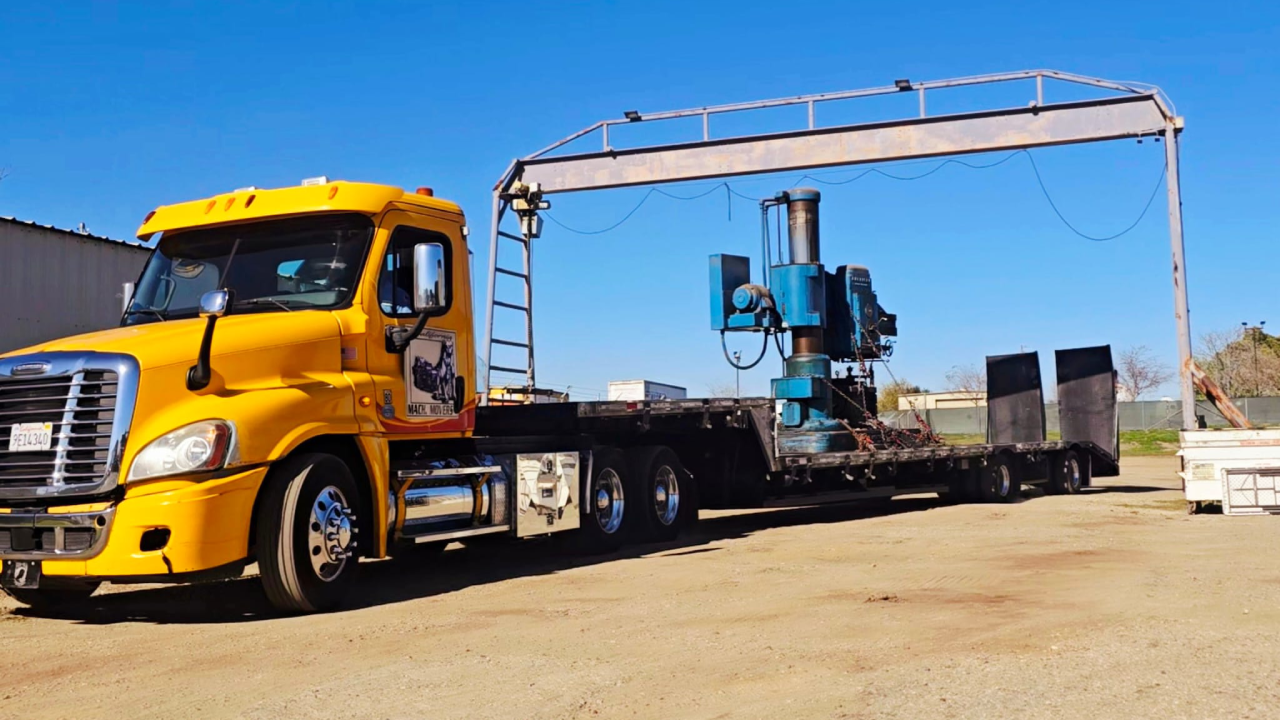
If your equipment, trailer, and truck combined exceed any one of these numbers, you’re in permit territory. Many industrial machines, including CNC equipment, generators, transformers, and aerospace components, trip at least one of these thresholds once they’re loaded and secured.
The Permits You’re Likely to Need
Here are some permits you need for heavy equipment moves:
1. Caltrans Transportation Permit
This is the main permit for any oversize or overweight load traveling on state highways. Caltrans reviews the route, checks bridge weight limits, and issues either a single-trip permit for a one-time move or an annual permit for companies that haul oversized loads regularly. Applications go through the state’s online permit system.
2. Local City or County Permits
Caltrans only covers state highways. If any part of your route runs through city streets or county roads, which is common for the “last mile” to a warehouse or factory, you may need a separate permit from that city or county. Los Angeles, Orange County, and other busy service areas often have their own rules layered on top of the state permit.
3. Pilot Car / Escort Requirements
Loads over certain width or length thresholds require pilot cars to travel ahead of or behind the truck. Some routes also call for a California Highway Patrol escort. The exact requirement depends on load dimensions and the specific roads on your route.
4. Crane and Rigging Permits
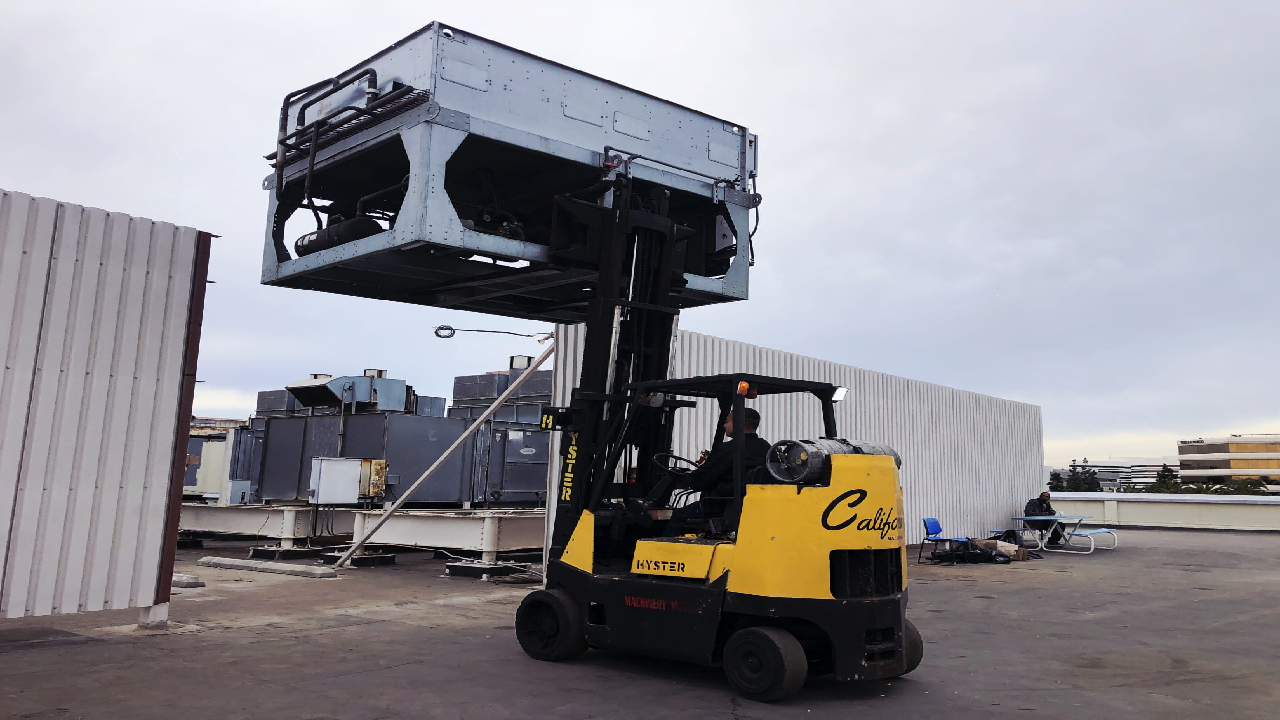
If a crane will be lifting equipment on a public street or sidewalk, most cities require a separate street-use or crane permit, along with proof of insurance. This is common when equipment must be lifted over a building or set through a roof opening rather than driven in.
5. Travel-Time Restrictions
Oversize loads generally can’t travel during darkness, weekends, or holidays. If a holiday lands on a Friday or Monday, that restriction often extends through the whole weekend. Always confirm current travel windows on the permit itself, since they can change by route.
The Permit Process, Step by Step
- Confirm exact dimensions and weight of the equipment once it’s crated, packed, or loaded onto the trailer, not just the equipment alone.
- Map the full route, from origin to final destination, including any local roads outside the state highway system.
- Apply for the Caltrans permit through the state’s online system, allowing extra time for review on complex routes.
- Apply for local permits for any city or county streets on the route, plus crane or street-use permits if a lift is involved.
- Arrange pilot cars or CHP escort if your load dimensions require them.
- Verify travel windows and reconfirm the day before the move, since conditions and construction zones can shift the approved route.
Common Mistakes That Cause Delays
Measuring the equipment only, not the loaded trailer. Permits are based on total combined dimensions, including trailer overhang.
- Assuming one permit covers the whole trip. A Caltrans permit doesn’t automatically cover city or county roads.
- Booking a move for a weekend or holiday without checking travel-time restrictions first.
- Skipping the crane permit when a lift is needed at either end of the move.
- Applying too close to the move date. Route review takes time, especially for loads near maximum limits or routes with bridge restrictions.
Why Work With an Experienced Rigging Team
Permit rules shift by route, by city, and sometimes by season. A rigging team that handles these moves regularly knows which roads carry weight restrictions, which cities require extra paperwork, and how to build a realistic timeline around approval windows. That planning is what keeps a move on schedule instead of stuck at a weigh station.
California Machinery Movers has been handling industrial equipment relocation across California since 1990. Our team manages engineer-approved rigging strategies, coordinates permits and route planning, and handles everything from CNC machines to aerospace and power generation equipment.
We serve Los Angeles, Temecula, Ventura, Bakersfield, Fontana, Corona, Chatsworth, Santa Barbara, and surrounding areas, with both local and long-distance transport.
FAQs (Frequently Asked Questions)
1. Do I need a permit for a short move within one city?
Possibly. Even short moves can require a permit if the load exceeds legal size or weight limits, or if a crane will operate on a public street.
2. How far in advance should I apply?
Start the permit process as early as possible once you have final dimensions. Routes with bridge restrictions or tight clearances take longer to review.
3. Can oversize loads travel at night?
Generally no. Most oversize permits restrict travel to daylight hours and prohibit weekend or holiday travel.
4. Who is responsible for getting the permits, me or the moving company?
An experienced machinery mover typically handles permit applications, route planning, and escort coordination as part of the move, so you don’t have to manage it directly.
Planning a heavy equipment move in California? Call California Machinery Movers at (800) 675-1548 for a quote and a permit-ready moving plan.
Read Also: 10 Critical Features of the Best Lab Equipment Moving Companies