

Factories and machine shops move more often than people think. A lease ends. A company outgrows its building. Land costs push a plant to a cheaper city. Whatever the reason, the machines have to go too.
California has many manufacturers, printers, aerospace suppliers, and food processing plants, so a lot of owners will face this job. One CNC machine can weigh several tons. Moving it takes planning, the right trucks, and a crew that knows how to rig heavy loads.
This guide covers the main factors to weigh before you move, from machine size to permits and timing.
Why Heavy Equipment Is Not Regular Freight
A machine can’t just be rolled onto a truck. Many have to be partly taken apart first. They need the right rigging to be lifted. At the new site, they often need to be rebuilt and leveled before they can run.
One rigging mistake can crack a casting, misalign a spindle, or damage the wiring in a control cabinet. That is why movers train for this work instead of treating it like general trucking.
What Should You Know About the Machine First?
Start with weight and size. Those two facts decide which forklift, rigging gear, and trailer the job needs. A tall or wide machine can also cause trouble inside the building, long before a truck shows up.
Gather these details before you ask for a quote:
- Maker, model, and approximate weight
- Length, width, and height
- Any unusual center of gravity, or parts that can come off for the trip
- Photos of the machine, the floor around it, the doors, and the loading area
- Your preferred move date
If you have the manual or data plate, use it. An exact weight beats “very heavy.”
How Does Site Access Change the Job?
Picture two identical machines. One sits by a roll-up door with a clear forklift path. The other is wedged between production lines at the back of a crowded floor. Same weight, very different job.
Movers look at the whole path, not only the machine. Watch for:
- Narrow doors and tight aisles
- Low ceilings
- Uneven pavement
- Limited forklift clearance
- Hard truck access
Check the destination too, including docks, door sizes, floors, slopes, and curbs. Then decide where the job ends. Unloading at the building is one task. Setting the machine in its exact spot on the line is another.
What Do Rigging, Disassembly, and Protection Involve?
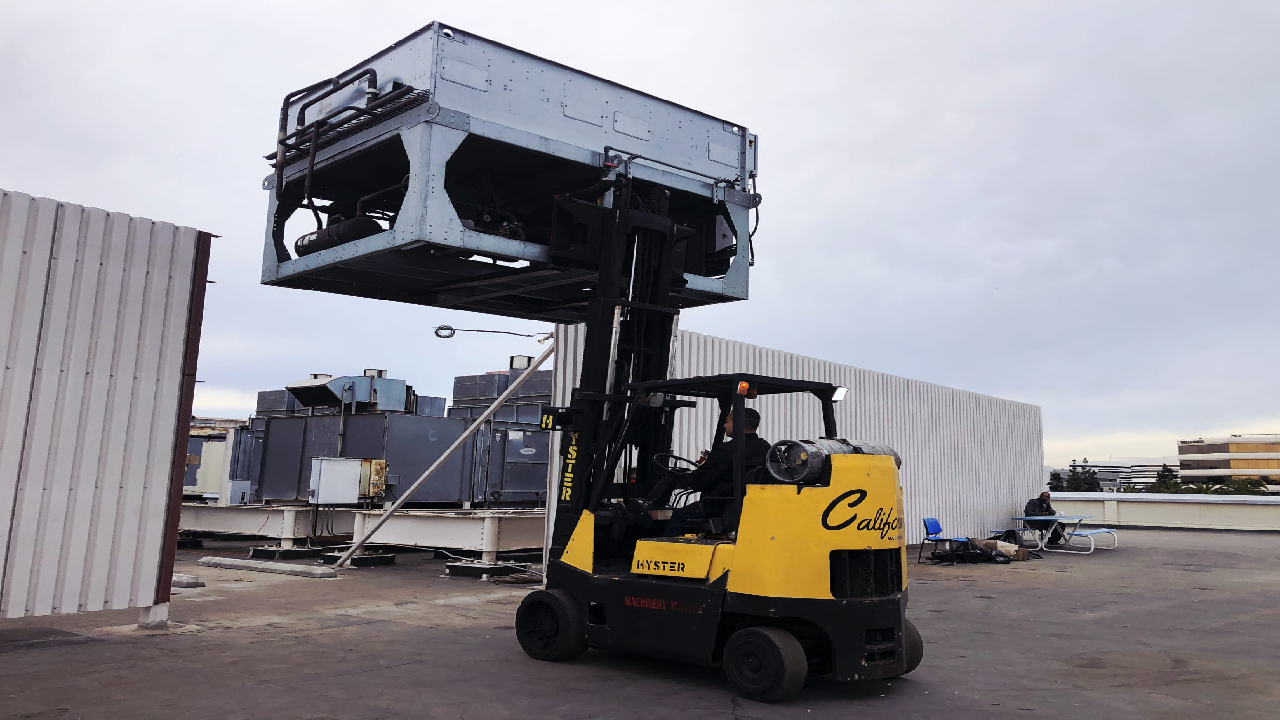
Rigging depends on the machine and the site. A machine that must be turned inside a tight space before it fits through a door needs a different plan than one parked by the loading door. For delicate or high-value equipment, engineer-approved rigging strategies are available.
Some machines travel in one piece. Others need guards, tables, conveyors, or control cabinets removed first. Decide early who will disconnect and prepare the machine: your technicians, the mover, the manufacturer, or another contractor. At the new site, a skilled crew can erect, install, and inspect it. For more details on preparing machinery for transport, read our guide to The Complete Guide to Rigging Permits and Regulations for Heavy Equipment Moves in California
Protection depends on the machine and the trip. Common options include:
- Custom crating built for the machine
- Palletizing and strapping
- Shrink wrapping against moisture, dust, and other hazards
Which Trailer Fits the Load?
Match the trailer to the machine, not to whatever is free at the yard.
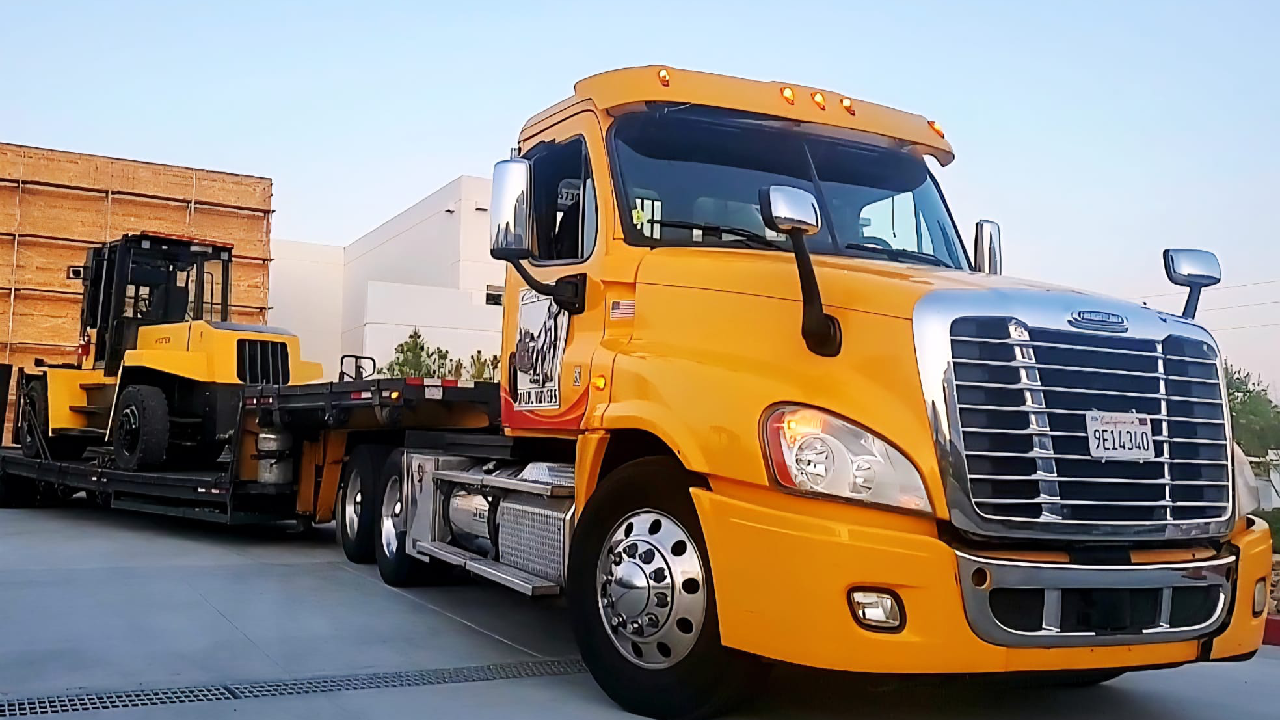
- Flatbed trailers open up the sides and top, so a forklift or crane can load them easily.
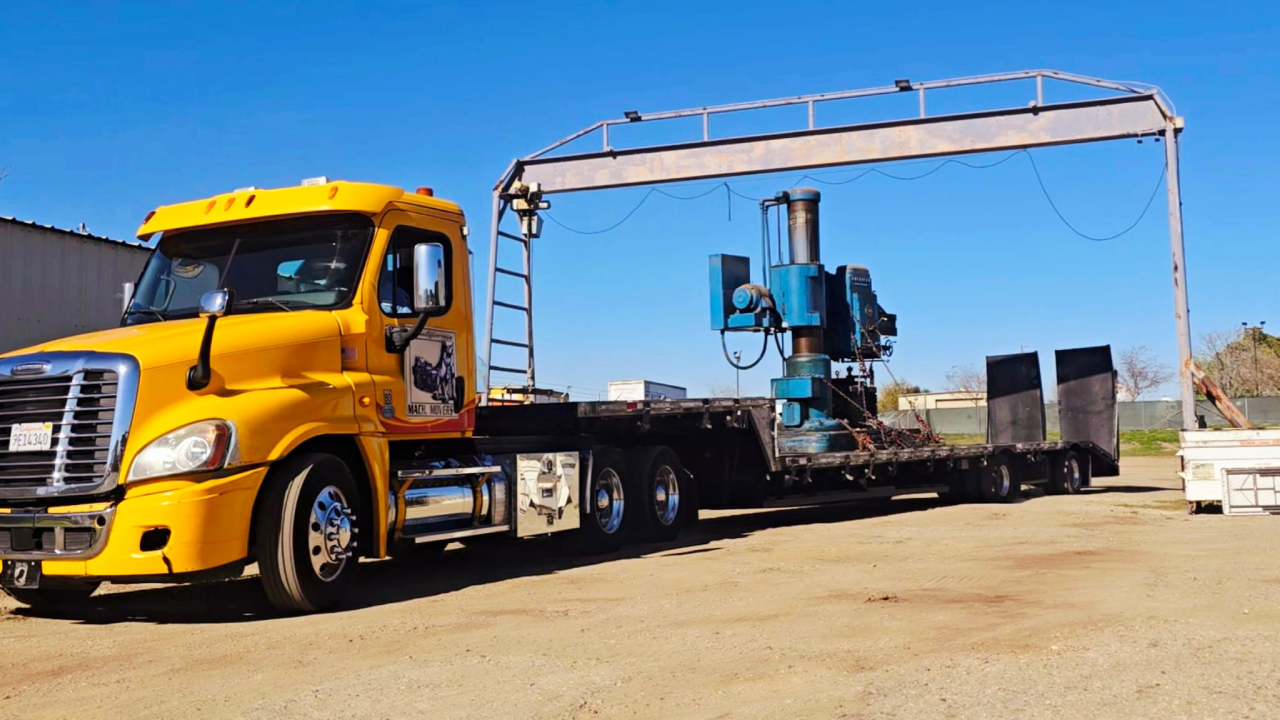
- Lowboy trailers ride close to the ground and suit tall or oversized equipment.
- Specialized rigs handle odd shapes and delicate, high-value loads.
Do You Need a Permit to Move Heavy Equipment in California?
Often, yes. California sets these limits for travel without a special permit:
- Length: 65 feet
- Width: 8 feet 6 inches
- Height: 14 feet
- Weight: 80,000 pounds gross vehicle weight
- Overhang: 3 feet in front, 6 feet in the rear
Go over any one, and you need a permit. Measure the loaded trailer, not just the machine, since permits use the combined size.
Here is what you may face:
- Caltrans permit: Needed for oversize or overweight loads on state highways. It can be single-trip or annual.
- City or county permits: Caltrans covers state highways only. The last mile often runs on local streets, and Los Angeles and Orange County can add their own rules.
- Pilot cars and escorts: Some loads need pilot cars. Some routes call for a California Highway Patrol escort.
- Crane permits: A lift on a public street usually needs a street-use or crane permit, plus proof of insurance.
- Travel-time limits: Oversize loads generally can’t move at night, on weekends, or on holidays.
Apply early. Review takes longer for loads near the limits or routes with bridge restrictions.
How Does California Machinery Movers Handle These Moves?
California Machinery Movers has served Southern California since 1990, with local and long-haul shipping. It runs three fully equipped rigs with five experienced riggers. The team moves single pieces and entire plants, and single-piece moves are its specialty. It handles CNC equipment, generators, printers, and laboratory equipment.
A typical job can include:
- Engineer-approved rigging, with permits and route planning coordinated by the team
- Hourly shipment tracking
- Written quotes
Where Does California Machinery Movers Work?
The service area runs from Los Angeles to Irvine, Riverside to Bakersfield, and Santa Monica to Simi Valley. It also includes Santa Fe Springs, Camarillo, San Diego, Santa Barbara, Temecula, Ventura, Fontana, Corona, and Chatsworth. Turnkey facility relocations can run within the U.S., Mexico, or Canada, with foundation setup, transport, and installation managed on a strict schedule.
Customers include printing shops, CNC shops, scientific labs, and power generation, pharmaceutical, and food and beverage plants. For aerospace and defense equipment, only highly trained movers are assigned.
How Do Timing and Storage Affect the Move?
Plants often move machines around production schedules, tenant deadlines, or contractor work. If your date can shift, say so. If it can’t, state the deadline up front.
Sometimes the new building isn’t ready. Indoor and outdoor storage can cover the gap between pickup and installation.
Compare quotes line by line. One may cover loading, rigging, transport, unloading, and placement. Another may cover transport only. The lowest number is not always the lowest final cost, since damage and delays can cost more than the gap between estimates. California Machinery Movers guarantees the lowest prices for moving equipment, locally or across the country.
Summary
A heavy equipment move goes best when the groundwork comes first. Know the machine’s weight and size. Check access at both ends. Plan the rigging, disassembly, and protection.
Match the trailer to the load. Confirm permits and travel windows before the truck rolls. Leave room for storage, and compare quotes with care.
Planning a move in California? Ask California Machinery Movers for a written quote, and have your machine details, pickup and drop-off cities, photos, and target date ready.