

Moving a CNC machine across a shop floor and relocating a 15,000-pound piece of equipment across Southern California are both machinery moves, but the cost can be very different.
Professional machinery moving services have to account for much more than the weight of the equipment and the mileage between two addresses. Access, loading conditions, rigging requirements, trucking, permits, scheduling, and even conditions at the destination can change the amount of labor and equipment required.
If you’re budgeting for an upcoming move, understanding these variables can help you plan realistically, compare quotes more intelligently, and avoid expensive surprises.
1. The Weight and Dimensions of the Machine
The most obvious starting point is the machine itself.
A compact machine tool that can be picked up with a standard forklift presents a very different moving challenge from a wide, top-heavy production machine that requires specialized rigging.
Machinery movers will typically want to know the approximate weight, length, width and height of the machine, along with any unusual center of gravity or components that can be removed for transportation.
Weight matters because it determines what type of forklift, rigging equipment, trailer, and support equipment may be required.
Dimensions matter just as much. An unusually tall or wide machine may create access problems inside a building or require additional planning once it reaches the road.
Don’t Guess the Weight if Documentation Is Available
If you have the manufacturer’s specifications, equipment manual, purchase documents, or machine data plate, provide that information when requesting a machinery moving quote.
An accurate weight is much more useful than describing a machine as simply “very heavy.”
2. How Easy the Machinery Is to Access
One of the biggest cost variables is often overlooked: getting to the machine.
Consider two identical pieces of equipment. One is sitting near a roll-up door with a clear forklift path and plenty of room outside for a truck. The other is wedged between production lines at the back of a crowded facility.
Although the machines weigh exactly the same, the second move may require considerably more work.
Narrow doors, tight aisles, low ceilings, uneven pavement, limited forklift clearance, congested production areas and difficult truck access can all affect the scope of the job.
Experienced machinery movers look at the entire path—not just the machine.
3. Rigging Requirements
Heavy machinery rarely rolls neatly onto a truck.
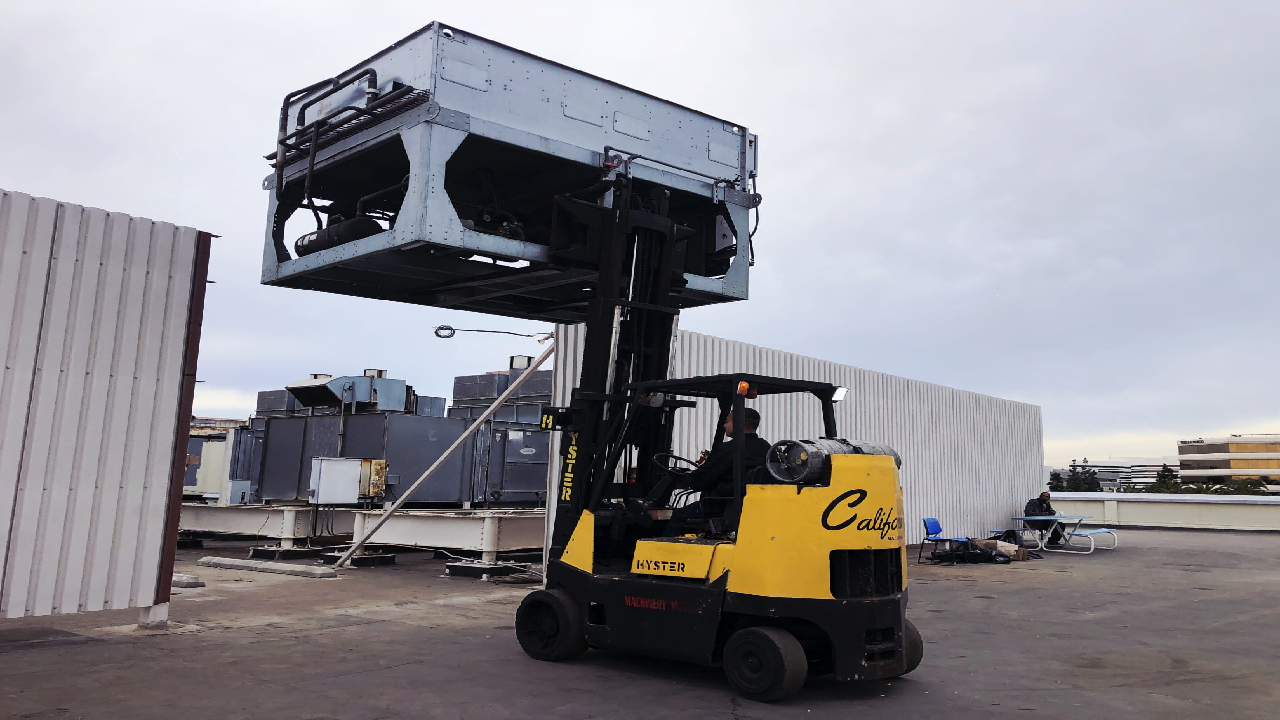
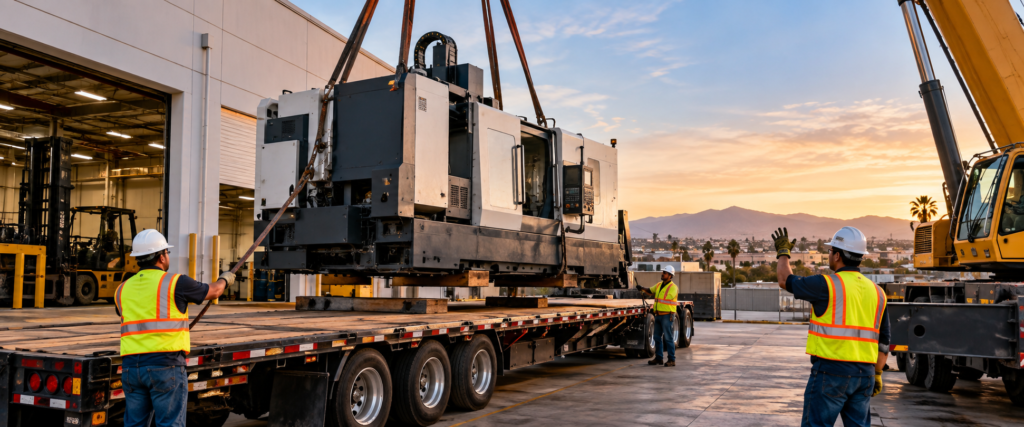
Depending on the equipment and site, professional machinery rigging and heavy equipment moving services may be required to lift, shift, rotate, skate, load, or position the machine safely.
More complex rigging normally means additional labor, equipment, and planning.
For example, a machine located directly in front of a loading door may be relatively straightforward to remove. A machine that must be rotated inside a tight production area before it can pass through a doorway can require a completely different approach.
That is why photographs of the surrounding area can be just as useful as photographs of the machine when requesting a quote.
4. Whether the Machine Must Be Disassembled
Some equipment can be transported as a complete unit. Other machinery needs partial disassembly before it can safely leave the facility.
Control cabinets, feed systems, guards, tables, conveyors, accessories and sensitive attachments may need to be removed.
When that’s necessary, machine assembly and disassembly services can become part of the overall relocation scope.
Before the move, determine whether your technicians, the machinery moving company, the equipment manufacturer, or another contractor will be responsible for disconnecting and preparing the machine.
Clear responsibility avoids confusion on moving day.
5. Pickup and Delivery Distance
Distance affects transportation costs, but mileage alone does not determine the final price.
A machinery move across Los Angeles County may involve relatively few highway miles but significant loading, traffic, access, and scheduling considerations. A longer move with straightforward loading and unloading conditions may have a very different cost structure.
For equipment traveling farther away, long-haul machinery transportation may require additional planning around the load, trailer, route, and delivery schedule.
When requesting a quote, provide the actual pickup and delivery cities rather than simply describing the project as a “local” or “long-distance” move.
6. The Type of Truck or Trailer Required
The equipment needs to match the load.
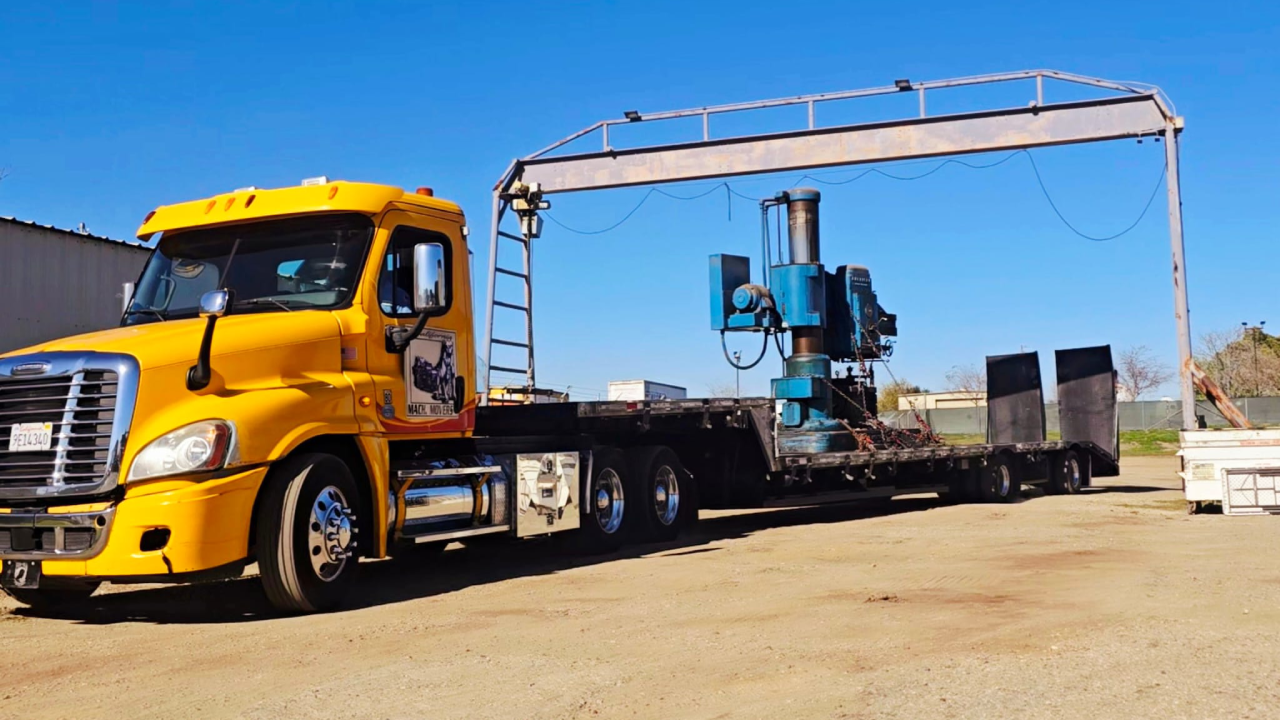
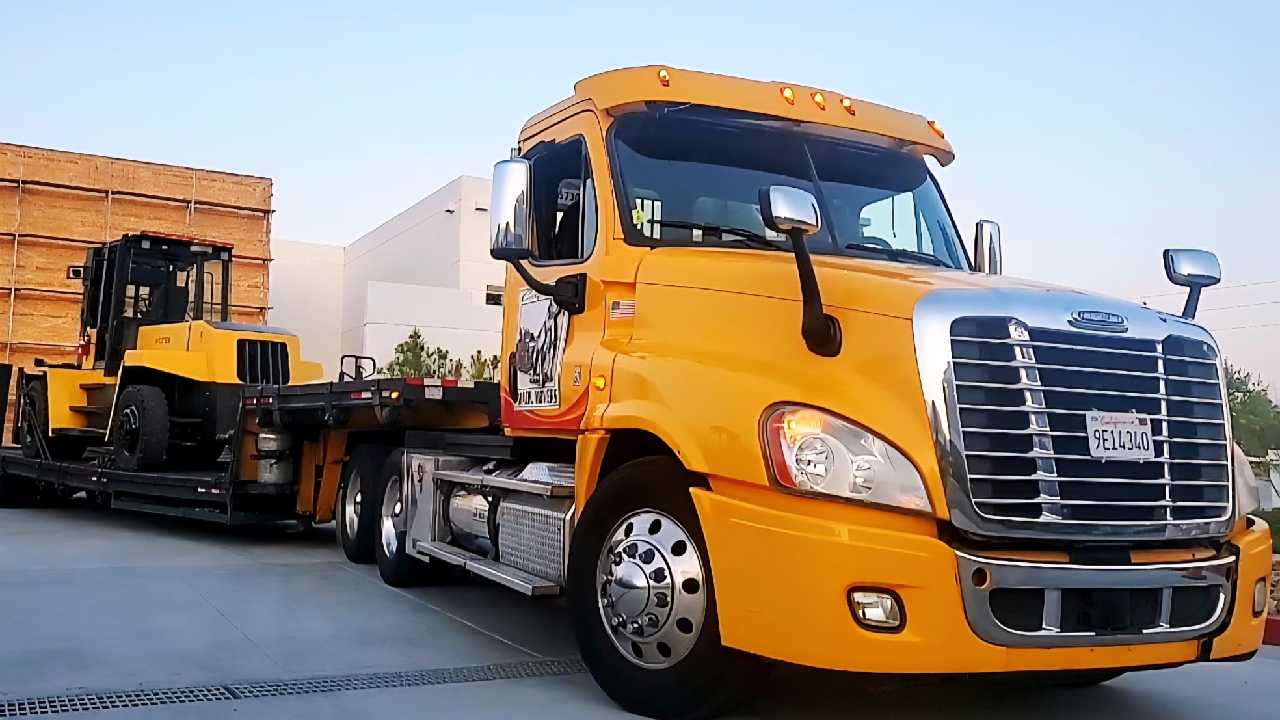
Depending on the machinery, a mover may need a particular trailer configuration or transportation setup to accommodate its dimensions and weight.
Transportation planning becomes especially important when machinery is unusually tall, wide, long, or heavy.
This is another reason accurate machine dimensions are important when requesting a heavy equipment moving quote.
7. Permits and Route Considerations
Some machinery shipments fall within normal transportation dimensions. Others may require additional route planning or permits.
Oversized or overweight transportation can involve roadway restrictions, bridge clearances, permitted travel periods, and other requirements depending on the load and route.
These factors can add planning time and affect transportation costs.
A machinery mover should evaluate the transportation requirements before the equipment leaves the facility rather than discovering a route problem after loading.
8. Conditions at the Destination
Businesses sometimes spend considerable time planning how a machine will leave the old building and much less time considering how it will enter the new one.
Both ends matter.
Truck access, loading docks, door dimensions, forklift maneuvering space, floor conditions, slopes, curbs and the final equipment position can all affect the job.
California Machinery Movers works with businesses across a variety of industries requiring specialized machinery handling, including manufacturing, printing, scientific laboratories and other industrial operations.
Placement Matters Too
There is a difference between unloading a machine into an open warehouse and positioning it precisely inside a production line.
Tell the mover where the job is expected to end.
“Unload at the building” and “place the machine in its final production position” are not necessarily the same scope of work.
9. Scheduling and Operational Constraints
Timing can affect the complexity of an industrial equipment move.
Manufacturers often need machinery moved around production schedules, tenant deadlines, contractor work, electrical installations, or facility handovers.
If your move date is flexible, say so when requesting a quote. If it is not flexible, make the deadline clear from the beginning.
Why Machinery Moving Quotes Can Look So Different
When comparing quotes from machinery moving companies, comparing only the final number can be misleading.
One quote may include loading, rigging, transportation, unloading, and final placement. Another may cover transportation only.
Before choosing a mover, find out exactly what is included.
What happens if the new facility isn’t ready?
Construction schedules, inspections, utility work, or other delays sometimes mean equipment cannot immediately be delivered to its final location.
In those situations, industrial equipment storage can bridge the gap between pickup and installation.
If your relocation schedule has several moving parts, also read 7 Signs Your Business Needs Industrial Equipment Storage Before Your Next Move for situations where arranging storage in advance can prevent problems.
Is packaging needed?
Sensitive surfaces, controls, and accessories may require custom crating, packaging, or shrink wrapping to protect them during handling, transportation, or storage.
Knowing these details makes it easier to compare machinery moving quotes on an equal basis.
How to Get a More Accurate Machinery Moving Quote
You do not need to prepare an engineering report before contacting a machinery mover.
You can, however, provide a few details that make the estimating process much easier:
Machine information: Manufacturer, model, approximate weight, and dimensions.
Pickup location: City, building type, machine location within the building, door dimensions, and loading conditions.
Delivery location: City, unloading conditions, building access, and intended final placement.
Photos: Include the machine, surrounding floor area, doors, hallways, loading area, and obvious obstacles.
Move date: Provide your preferred date or general scheduling window.
Special requirements: Mention unusual dimensions, sensitive equipment, disassembly needs, restricted access, storage requirements, or other concerns.
The more accurately the mover understands the job before arriving, the easier it is to develop a realistic plan and quote.
A Simple Example: Same Machine, Different Move
Imagine a manufacturer needs to move a CNC machine from one Southern California facility to another.
Move A: The machine is beside a ground-level roll-up door. A forklift can approach it directly. The destination has equally good access.
Move B: The exact same CNC machine sits inside a congested production area. Other equipment limits forklift access. It must be repositioned before leaving the building, and the destination has a narrow entrance requiring precise placement.
The transportation distance might be identical.
The work involved is not.
This is why machinery moving cost is better understood as a combination of equipment + access + rigging + transportation + placement, rather than simply weight multiplied by mileage.
Can You Reduce the Cost of a Machinery Move?
Sometimes.
Clear the path before the moving crew arrives, provide accurate machine specifications, coordinate electrical disconnects in advance, confirm doorway dimensions, prepare the destination, and identify access restrictions early.
Good preparation can make a machinery relocation more efficient without compromising safe handling.
The Lowest Quote Isn’t Always the Lowest Final Cost
Industrial machinery often represents a significant business investment.
Damage, delays, production interruptions, or an improperly planned delivery can cost considerably more than the difference between two estimates.
California Machinery Movers has been providing local and long-haul machinery moving services since 1990. You can learn more about California Machinery Movers and review customer feedback from previous machinery moving projects before planning your project.
Planning a Machinery Move in California?
Every machinery move is different, which is why useful pricing starts with the details of the actual job.
California Machinery Movers works with manufacturers, machine shops, warehouses, contractors, and other businesses that need machinery and industrial equipment relocated throughout Southern California or transported over longer distances.
Whether you’re moving one machine across town or coordinating equipment between facilities, providing the machine specifications, pickup and delivery locations, photos, and desired move date is the best place to start.
Ready to price your project? Request a machinery moving estimate from California Machinery Movers.