

Oversize and Overweight Load Permits in California: A Step-by-Step Guide for Equipment Movers
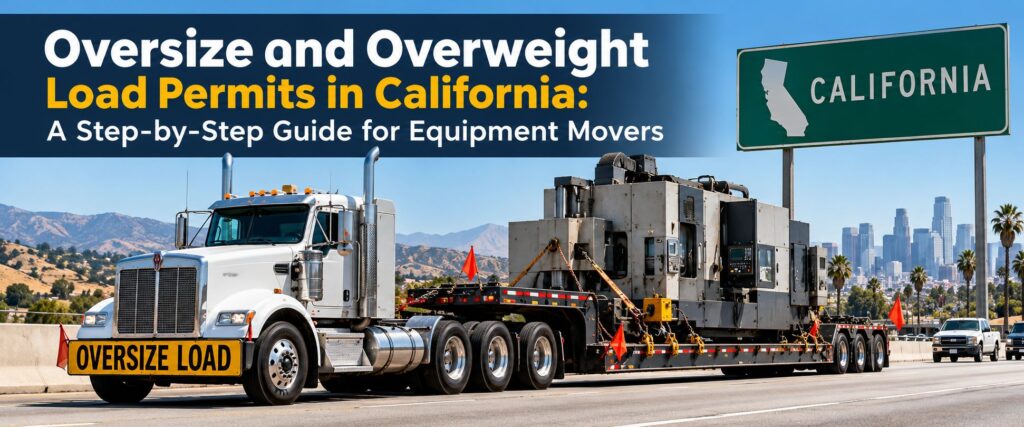
A machine can look manageable on a shop floor. Then it goes onto a trailer, gets strapped down, and the numbers change. A CNC machine, a generator, a transformer, or a piece of aerospace equipment can push a loaded rig past what the road allows.
California regulates this closely. State and local agencies control the size, weight, and route of every large load. Move without the right permit, and you may face fines, delays, or a truck held at the roadside while your operation waits.
This guide walks through how the permit process works so your next move stays on schedule.
Why California Reviews Large Loads
Heavy machinery puts stress on roads, bridges, and overhead structures in ways that everyday vehicles do not. The state reviews oversized loads to protect that infrastructure and keep other drivers safe.
Each permit request checks the route for:
- Low bridges
- Tight turns
- Weight limits
- Construction zones
Without a valid permit, a load can legally be pulled off the road before it reaches the jobsite.
Do You Need a Permit?
Not every machinery move does. A load wider than 8 feet 6 inches, taller than 14 feet, longer than 65 feet, or heavier than 80,000 pounds GVW needs an oversize or overweight permit from Caltrans before it travels on a state highway.
California sets these baseline limits for standard travel without one:
- Length: 65 feet
- Width: 8 feet 6 inches
- Height: 14 feet
- Weight: 80,000 pounds gross vehicle weight
- Overhang: 3 feet in front, 6 feet in the rear
If the equipment, trailer, and truck combined go over any one of these, you are in permit territory. Many industrial machines, including CNC equipment, generators, transformers, and aerospace components, cross at least one line once they are loaded and secured. For a broader explanation of budgeting, see our article on heavy machinery moving costs in California.
Which Permits Might Your Move Need?
1. Caltrans Transportation Permit
This is the main permit for oversize or overweight loads on state highways. Caltrans reviews the route, checks bridge weight limits, and issues either a single-trip permit for a one-time move or an annual permit for companies that haul oversized loads often. Applications go through the state’s online permit system.
2. Local City or County Permits
Caltrans covers state highways only. If any part of your route uses city streets or county roads, which is common for the last mile to a warehouse or factory, you may need a separate local permit. Los Angeles, Orange County, and other busy areas often add their own rules on top of the state permit.
3. Pilot Car and Escort Requirements
Loads over certain width or length thresholds need pilot cars ahead of or behind the truck. Some routes also call for a California Highway Patrol escort.
4. Crane and Rigging Permits
When a crane will lift equipment on a public street or sidewalk, most cities require a street-use or crane permit, along with proof of insurance.
5. Travel-Time Restrictions
Oversize loads generally cannot travel in darkness, on weekends, or on holidays. If a holiday falls on a Friday or Monday, the restriction often covers the whole weekend. Check the travel windows printed on your permit, since they can change by route.
The Permit Process, Step by Step
Confirm the exact dimensions and weight once the equipment is crated, packed, or loaded on the trailer, not just the machine alone.
- Map the full route from origin to destination, including local roads outside the state highway system. For a comparison of planning considerations, read local vs. long-distance machinery moving.
- Apply for the Caltrans permit through the online system. Allow extra review time on complex routes.
- Apply for local permits for any city or county streets, plus crane or street-use permits if a lift is involved.
- Arrange pilot cars or a CHP escort if your load requires them.
- Verify travel windows and reconfirm the day before the move. Construction zones can shift an approved route.
Common Mistakes That Cause Delays
The biggest one is measuring the equipment alone. Permits are based on total combined dimensions, including trailer overhang. A few others come up again and again:
- Assuming one permit covers the whole trip. A Caltrans permit does not automatically cover city or county roads.
- Skipping the crane permit when a lift is needed at either end.
- Applying too close to the move date. Route review takes time, especially near maximum limits or on routes with bridge restrictions.
Quick Answers to Common Questions
1. Do I need a permit for a short move inside one city?
Possibly. A short move can still need one if the load exceeds legal size or weight limits, or if a crane will work on a public street.
2. How early should I apply?
As soon as you have final dimensions. Routes with bridge restrictions or tight clearances take longer to review.
3. Who handles the permits, me or the moving company?
An experienced machinery mover typically handles permit applications, route planning, and escort coordination as part of the move.
Working With an Experienced Rigging Team
Permit rules shift by route, by city, and sometimes by season. A team that handles these moves regularly knows which roads carry weight restrictions and which cities ask for extra paperwork.
California Machinery Movers has handled industrial equipment relocation across California since 1990, with a fleet of three rigs and five experienced riggers. The team manages engineer-approved rigging strategies, coordinates permits and route planning, and moves everything from CNC machines to aerospace and power generation equipment. Learn more about our machinery rigging and transportation services.
Services are provided across Los Angeles, Temecula, Ventura, Bakersfield, Fontana, Corona, Chatsworth, Santa Barbara, and surrounding areas, locally and over long distances.
Permits protect California’s roads and bridges, and they protect your schedule too. Keep these points in mind:
- A load over 65 feet long, 8 feet 6 inches wide, 14 feet tall, or 80,000 pounds GVW needs a Caltrans permit on state highways.
- City and county roads may need separate permits, and crane lifts on public streets usually need their own.
- Measure the loaded trailer, map the full route, and apply early.
Planning an oversize or overweight equipment move in California? Request a quote from California Machinery Movers and ask for a permit-ready moving plan.